How Do Real Estate Private Equity Firms Make Money? | Forrest Jinks, Altus Equity Group

The pref, the waterfall and the asset management fee: how real estate sponsors get paid, and why squeezing them can backfire on investors.


 Amazon Music
 PocketCasts
 Podcast Addict
 Castro
Key Takeaways
- Traditional private equity funds generally charge "2 and 20": a 2% annual management fee on fund capital plus 20% of profits.
- Forrest Jinks says real estate private equity uses many different return structures, and any structure works if the sponsor and the investor both agree to it.
- Real estate sponsors typically charge an asset management fee, often calculated on property revenue rather than on the amount invested.
- Investors usually receive a preferred return before profits are split through a waterfall that changes the split at higher return tiers.
- Jinks argues the best structure aligns interests by paying sponsors more for outperformance, rather than squeezing their fees.
How do real estate private equity firms make money? Forrest Jinks, Founder & CEO at Altus Equity Group, explains how real estate fee structures differ from the traditional 2-and-20 private equity model, from asset management fees and preferred returns to waterfall splits, and why he sees sponsor alignment as the key term for investors.
About Forrest Jinks: Forrest is the founder and CEO of Altus Equity Group, a private real estate investment firm with offices in Texas, South Carolina and California. He has more than 20 years of real estate investing experience across multifamily, industrial, commercial and retail properties.
Connect with Forrest Jinks:
Website: https://altusequity.com
LinkedIn: https://www.linkedin.com/in/forrestjinks/
Connect with host Joshua Wilson:
LinkedIn: https://www.linkedin.com/in/joshuabrucewilson/
Follow The PE Podcast:
Website: https://www.thepepodcast.com
LinkedIn: https://www.linkedin.com/company/the-pe-podcast
YouTube: https://www.youtube.com/@thepepodcast
More private equity questions answered: https://www.thepepodcast.com/questions/
A One Iron Network production: Executive Producer Joshua Wilson
The PE Podcast is for informational and educational purposes only. Nothing discussed is investment, legal, tax, or financial advice, or an offer or solicitation to buy or sell any security or fund interest.
Topics: real estate private equity fees, 2 and 20, asset management fee, preferred return, distribution waterfall, sponsor alignment
Disclaimer: Joshua Wilson is a licensed Florida real estate broker (BK3038350) and holds FINRA Series 79 and Series 63 licensure. The PE Podcast is produced by One Iron Network LLC for informational and educational purposes only. Nothing discussed constitutes investment advice, legal or tax advice, a solicitation, or a recommendation to buy or sell any security or to pursue or avoid any transaction. All views and opinions expressed by the host and guests are their own and do not necessarily reflect the positions of One Iron Network LLC, Smooth Stone Capital, any regulatory agency, or any employer. Any performance figures, valuations, or transaction terms discussed are historical, specific to the circumstances described, and are not indicative of future results. Listeners should consult their own legal, financial, and tax professionals before making any business, financial, or transaction decision.
Let's Connect on LinkedIn:
https://www.linkedin.com/in/joshuabrucewilson/
Follow The PE Podcast:
https://www.linkedin.com/company/the-pe-podcast/
Powered by One Iron Network:
https://www.oneironnetwork.com/
Frequently Asked Questions
How do real estate private equity firms make money?
According to Forrest Jinks of Altus Equity Group, real estate sponsors typically earn an asset management fee to cover ongoing costs, then share in profits above a preferred return paid to investors, through a tiered structure called a waterfall.
What is "2 and 20" in private equity?
Jinks describes 2 and 20 as the traditional private equity model: an annual fee of 2% of the capital in the fund, plus 20% of the profits. He notes that real estate private equity often uses different structures.
What is a preferred return in real estate private equity?
A preferred return is the share of returns that goes to investors first, before the sponsor shares in profits. Jinks says preferred returns of 6%, 8% or sometimes 10% are common.
What is a distribution waterfall?
A waterfall splits profits between the sponsor and investors in tiers above the preferred return, with the sponsor's share rising at higher return levels. Jinks says the key is making sure the structure aligns the sponsor's and investor's interests.
Joshua Wilson:
Forrest, how do PE firms make money? Talk to us about the different business models and how you guys do it.
Forrest Jinks:
Well, I I don't have as much experience in traditional PE firms, but generally it's a two and twenty. So if there's $100 million in a fund, there's a $2 million annual fee, and then 20% of all kind of profits on returns from there. Real estate is not the same, generally speaking, and there are lots and lots of different return structures. So I can't tell you that there's, like, this is what you should look for, because there's, you know, anything that you agree to works, right? If the sponsor agrees and the investor agrees, then it works, generally speaking. However, there's going to be some sort of asset management fee that helps the the company pay its ongoing bills. That is, you know, where private equity is usually calculated off the investment amount, a lot of times the asset management fee is calculated off of revenue, so it's almost more like a property management fee. And then there's generally a preferred return to the investor, 6%, 8%, sometimes 10%, or and and that goes, you know, they'll say the investor invests $10 million, you know, the first $800,000 of any return from the investment goes to the investor if it's an 8% pref. From there, it's what's called a waterfall. So maybe the real estate company gets 20% of profits above the 8%, and the investor gets 80% up to a 12% return. And then from 12 to 15, it's 70-30, and so on. And really, I think the key is making sure that there's an alignment of interest. I think investors sometimes make the mistake of trying to squeeze their sponsors, where really I think the best structure is trying to get your sponsor to outperform. Pay them more for outperformance, because that's going to benefit you as an investor as well.
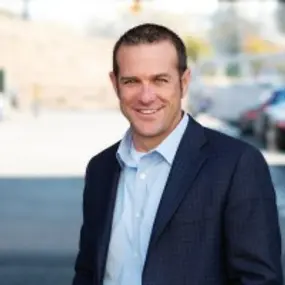
Founder & CEO, Altus Equity Group
Forrest Jinks is the founder and CEO of Altus Equity Group, a private real estate investment firm with offices in Texas, South Carolina and California. He has more than 20 years of real estate investing experience across multifamily, industrial, commercial and retail properties in multiple states.
Altus focuses on capital preservation, tax efficiency and long-term wealth creation for its private investors, and structures deals to be held rather than flipped. Its sister companies include Altus Capital Group, a private money lender, and Altus Management Group, a property management firm. Forrest is known for creative deal structuring and for making investor experience — clear, early, direct communication — central to how the firm operates.